
Diagnosing Soft Images, in Your Spotting Scope: A Practical Guide
Having a picture through your spotting scope can be very annoying. Of thinking that the quality of your equipment is bad it's important to think about some reasons: changing the focus moving where you are looking from or not thinking that your gear is the problem. Things like not focusing heat making the air wavy shaking or not setting things up correctly can all make the picture soft. These can be hard to tell apart. A simple check can help you find the problem before you spend money on equipment or make decisions based on views.
Understanding Image Stability
When you see a picture the first thing to do is look without touching the focus. Find something thats clear and not moving. These could be the lines on a sign away the edge of a roof or the shape of a tree that is easy to see. If everything is a little blurry but the details do not move it is more likely that the problem is with the focus or the lens being dirty.
If you see the edges moving getting bigger or sometimes getting clearer and then getting blurry again you might be seeing the effect of heat. Warm places like roads or rocks make the air above them hot which can make the picture look different. This is often more visible when you use a magnification. A good question to ask is whether the picture becomes steady enough for what you need to see.
Differentiating Between Focus Error and Atmospheric Effects
One mistake is to change the focus when there is a lot of heat making the picture shake. After making one change wait a bit to see the picture. A series of changes can mix up what is getting better and what is just changing.
Whenever you can compare your target from distances or heights. Some surfaces react differently to the weather; a vertical line close by a roof and a shaded object might not all be affected the way. If a cooler shaded part is easy to see while the sunny parts are not as steady it is probably the weather, not your equipment.
Try using a magnification. You might lose some detail. You might get an reliable picture. Higher magnification is only helpful if the weather is good the support is good and the object you are looking at has a lot of contrast.
Checking Your Setup Before Blaming the Equipment
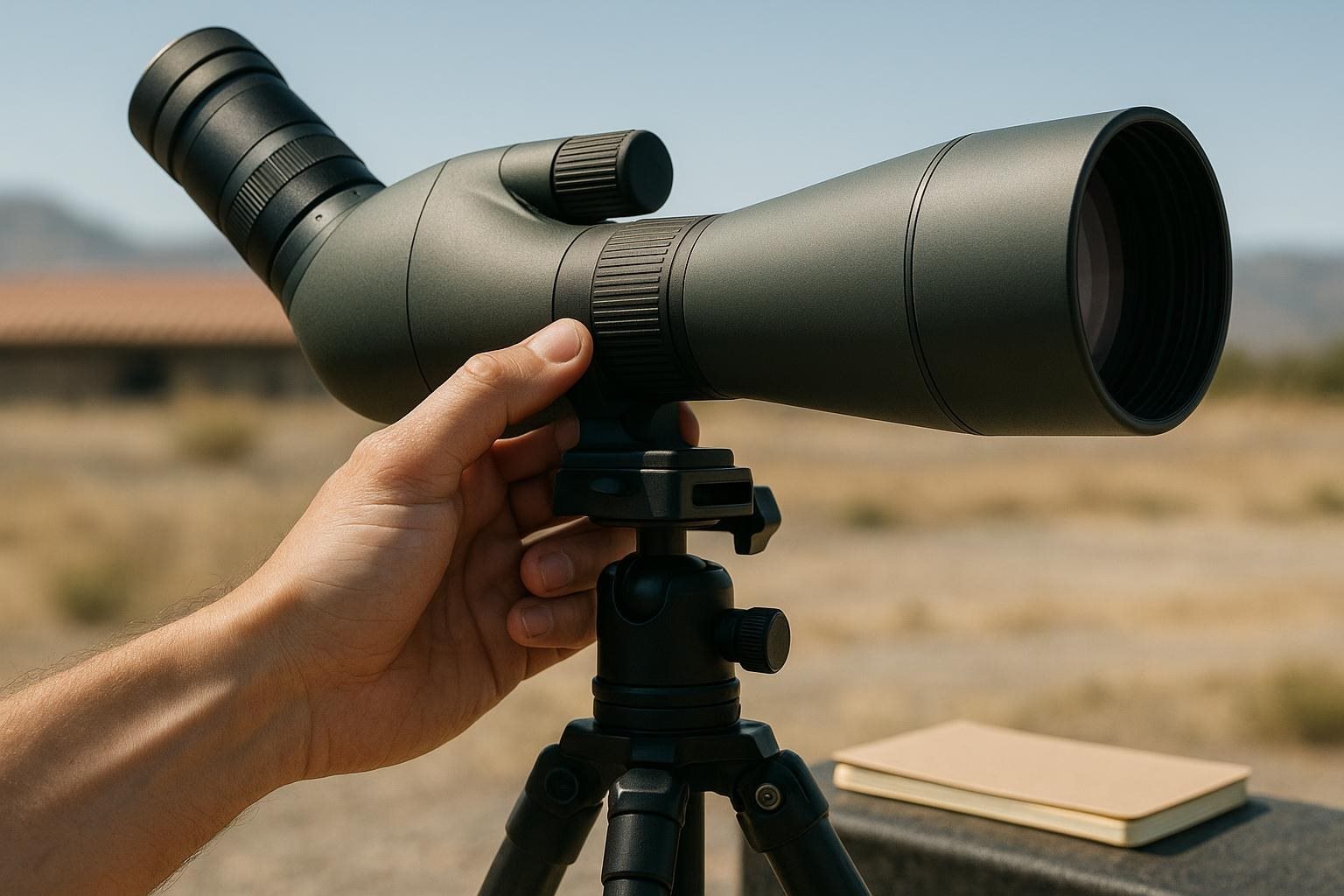
Before you think your equipment is the problem make sure your spotting scope is set up properly. Put the instrument on the support you plan to use and stop any movement. Make sure the tripod head is tight enough to stay in place without making it hard to control. Check that the part where the scope is placed is secure; even a little bit of movement can make the picture look soft when you adjust the focus or change where you are looking.
Make sure you are standing in the place behind the eyepiece with the part that goes around your eye adjusted well so you can see the picture. Things like a shape, uneven brightness or a small window to look through often mean you are not in the place not that the focus is wrong. This is especially true for people using binoculars, who need to make sure the pictures match up; if they do not it can make the picture look blurry.
When it comes to cleaning the lenses focus on the parts. Dust on the outside might not matter much. Fingerprints, oils or dried bits on the lenses can make the picture worse. Use the way the maker says to clean and do not move any dirt across the lens.
Doing a Test with a Clear Target
To check the performance keep the support eyepiece, target and direction. Write down any changes you make; sometimes the picture can get better because of a hold, a background or a break in the weather.
Start your test with a magnification looking at the parts of the target. Once the details look as clear as the weather allows move your eyes a little without moving the scope. If the edge stays clear and steady it means your setup is probably okay. If it moves check your support. How it is set up.
Next try changing the magnification and focusing again. It is important to know that focusing at one level might not look the same at another. The goal here is to see if higher magnification gives details or just makes the wobbles and heat effects bigger.
Knowing When to Stop Changing Things
If a careful change makes one part better but makes another part worse this might be normal because of how depth of field works not because your equipment is broken. If no change makes the picture steady check the weather and your setup before thinking that something is wrong with your equipment.
Lightweight supports can be easier to carry. They might not be steady enough when you need to focus. On the hand heavy strong setups help with focusing. Might not be as easy to carry for walks to good viewing spots. Thinking about these choices will help you decide what gear to use.
A Quick Check List to Make Sure
Before you trust what you see through your scope ask yourself these questions:
– Is the picture shaking, still or changing when you touch it?
– Does one clear focus change make an edge clearer?
– Does lowering the magnification make the picture steadier?
– Is your support and tripod not moving
– Are the lenses clean and not dirty?
– Does the problem stay the same when you change the object or where you are looking from?
Writing down information like the object your setup, the weather and the magnification level can be very helpful. This can explain what is going on and help with any talks, about warranty, repairs or choosing equipment. By separating the parts that're about focus the weather shaking and where you are standing you will get better at seeing things whether you are shooting, planning something or doing things that need eyes.